
Articles · Technique
Nerikomi and neriage: two arts easily confused
Both work with coloured clays; one is born on the wheel and the other in the hands.
Coloured clays
Nerikomi and neriage are two arts within the art of ceramics. In both, the colour isn't painted on top: it is the clay itself. Clays of different tones are mixed and the pattern lives inside the wall of the piece.
Neriage, on the wheel
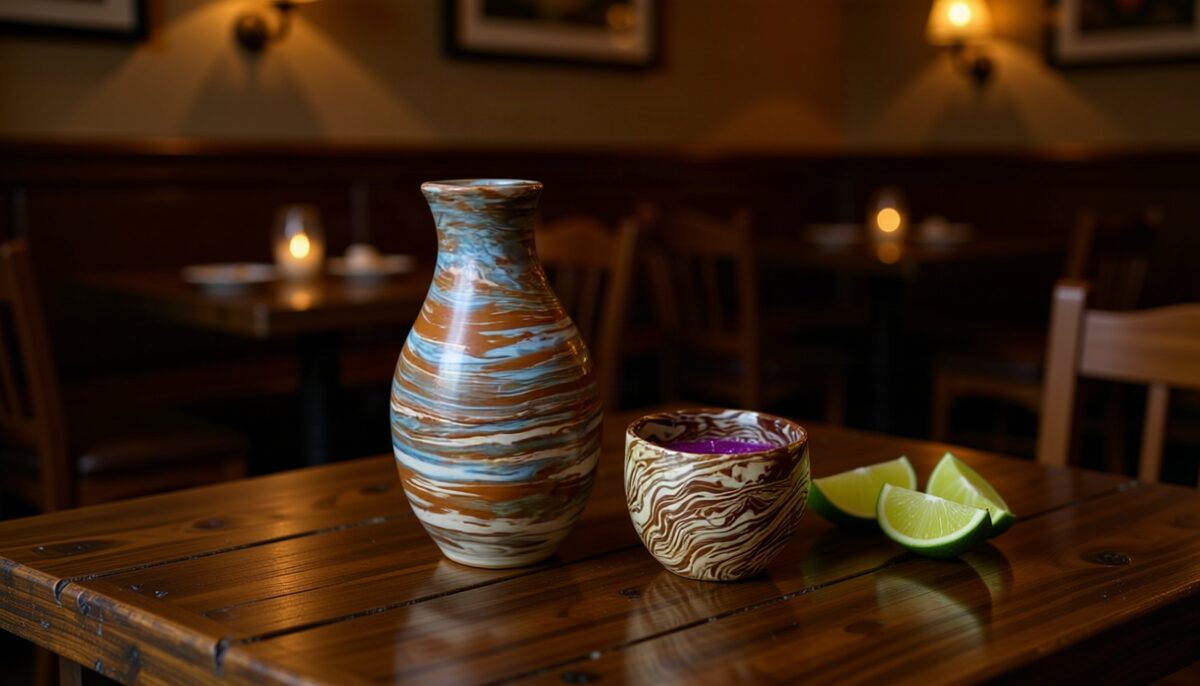
In neriage the coloured clays are mixed on the wheel. The piece grows as it turns, and from that turning a tall vase is born: the pattern appears in the turn, like a vein that rises with the form.
Nerikomi, by hand
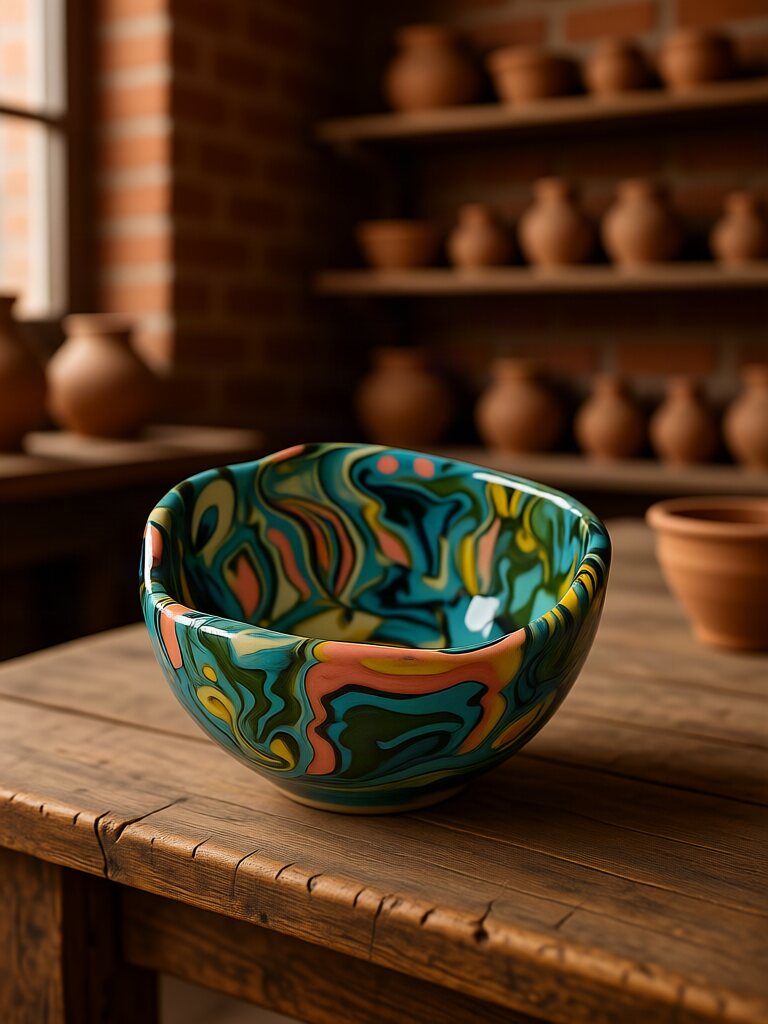
In nerikomi the coloured clay is shaped by hand. Several clays are stacked, folded and joined into a single block, and the block is cut into slices. Each slice shows a different pattern, and the pattern runs through the wall from side to side: you see it outside and inside.
Why they get confused
They are confused by people who aren't in the know. In fact they differ even in proportions: what grows on the wheel asks for one measure, and what is assembled from slabs asks for another.
Roots in Japan
Both techniques have Japanese roots. Today they keep being reinvented, and no two pieces come out the same. In the nerikomi workshop you choose your colours, build your own block and cut it to discover what pattern was hidden inside.
Next article